
Skeddy for Drivers
Skeddy Technologies Inc.Auto & Vehicles
2.8401.00 Reviews
- Version
- 5.17.0
- Installs
- 10.00K
- Age Rating
- Everyone
Screenshots
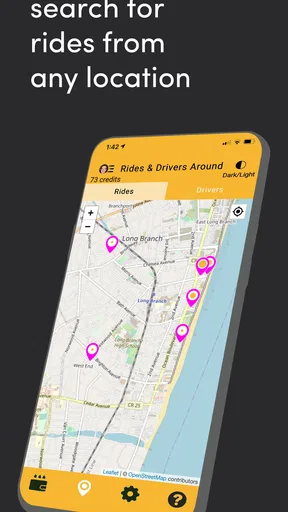
Our Review of Skeddy for Drivers
 Analysis by Appyee
When I’m driving, even a small bit of phone juggling can turn a routine trip into a distraction. A scheduling app for drivers sounds useful in principle, but it has to fit the way people actually travel—and it shouldn’t encourage anyone to interact with a screen behind the wheel. Skeddy for Drivers is aimed at that particular problem: keeping plans and reminders manageable for people who spend time on the road. My view is that its idea is appealing, but its usefulness depends on how well its voice-led approach fits your needs and your driving habits.
Who is likely to benefit from a driver-focused scheduler?
I can see the appeal for people whose work involves frequent trips, such as delivery drivers, mobile service workers, or anyone moving between appointments. Remembering a follow-up call, a stop for supplies, or a meeting time is harder when the day is split across multiple journeys. A tool intended to capture a task by voice could make it easier to record that thought for later instead of relying on memory.
It may also suit drivers who already plan their day around a calendar and want a driving-oriented way to handle small scheduling tasks. The key distinction is that Skeddy is a ride-scheduling app for drivers, not a replacement for careful trip planning or a reason to manage errands while the car is moving. I would use any voice interaction only when it is safe and lawful, and pull over if a task needs attention beyond a brief, simple command.
Readability, navigation, and the practical workflow
From the way the app is presented, the central promise is making scheduling feel less cumbersome for drivers. That focus matters: a general calendar can already hold appointments, but it may not feel designed around the moments when a driver remembers something between stops. A focused workflow is most helpful when it lets you capture a thought quickly and return your attention to the road.
Before depending on any scheduling app, I recommend trying the whole process while parked. Check how you start a task, how you confirm what was understood, and where the reminder appears afterward. That simple rehearsal can show whether the controls and wording make sense to you before you are in a time-pressured situation. It also helps identify whether you need to make a note more specific—for example, distinguishing a reminder to call someone from an appointment you need to attend.
For readability, the important question is not just whether text looks clear on a stationary phone. Drivers should not be reading or navigating screens while moving. I would treat the display as something to set up before a trip or check after parking, and judge the app by how easily it supports that safe pattern rather than by how much it invites you to tap.
Motor and sensory considerations
Voice interaction can be useful for someone who finds small touchscreen controls difficult, or whose hands are occupied with driving tasks. But it does not make every situation accessible. Speech can be tiring, uncomfortable, or unreliable for some people, and a driver may not be able to speak privately when passengers are present. Noise, accents, speech differences, and the need to be understood can also make voice entry a poor fit.
That is why I would not assume a voice-centered workflow works equally well for everyone. If you have limited speech, hearing, vision, or motor control, try the app in a calm, parked setting and see whether its actual interaction suits you. If you need another person to help set up or check a schedule, that may be a more practical arrangement than trying to operate any phone interface while driving.
Price, availability, and the learning curve
Skeddy is a free app from Skeddy Technologies Inc. for the Auto & Vehicles category. It has an Everyone age rating, and its current Android version is 5.17.0, with Android 8.0 or later required. The app also offers in-app purchases, so I would look over the purchase choices before committing to any paid option and decide whether the free experience already covers what you need.
The app has an average rating of 2.8 from 714 ratings, with 400 reviews and 10K+ installs. Those figures make me cautious about recommending it as an essential tool without first trying it yourself. A scheduler becomes part of a routine only when it behaves predictably; I would start with low-stakes reminders and check that they are recorded as intended before trusting it with an important appointment.
Where it fits—and where it may fall short
Compared with a standard calendar, Skeddy’s driver-focused identity may be appealing if you want a way to think about scheduling in the context of time on the road. A regular calendar is often the simpler choice if you mainly create events at a desk, want a familiar interface, or already have a planning method that works. For navigation alone, a dedicated navigation app is the more direct tool; scheduling and finding a route are related needs, but they are not interchangeable.
For an everyday example, imagine finishing one appointment and remembering that you need to arrange another for later in the week. The useful outcome is capturing the reminder without letting it take over the drive. I would wait until parked if the task needs a precise date, a name that may be misheard, or several details. That extra pause is a sensible trade-off: a reminder that is accurate and safely entered is worth more than saving a few seconds.
One practical habit is to keep commands short and check the result at the next safe stop. A compact request is easier to say and easier to review than a long explanation. Another is to separate “remember to do this” from “schedule a fixed appointment”: those are different intentions, and a quick check afterward can prevent a vague note from being mistaken for a timed commitment.
Using Skeddy in real driving conditions
Before relying on Skeddy during a trip, I’d use a parked moment to decide which tasks are simple enough to capture by voice and which can wait until later. That small distinction matters because a reminder is only helpful if it is entered clearly and at a safe time. The same planning also makes it easier to judge how the app fits different vehicles, road conditions, and personal needs.
Situational access and safer use
Driving is not one uniform setting. A quiet commute, a noisy work vehicle, a passenger-filled car, and a stop-and-go route all place different demands on a voice-oriented tool. I would choose a calm moment before setting off to prepare anything predictable, such as checking the day’s commitments, and reserve in-car use for a simple thought that can be captured safely. If traffic is demanding, weather is poor, or a passenger needs attention, the right choice is to leave the phone alone.
This also answers a common practical question: can an app remove the need to stop? I would not plan around that assumption. Voice may reduce the need to touch the screen for a simple task, but it cannot guarantee that every request will be understood or that every driving situation is suitable for interaction. If you need to correct an entry, inspect details, or make a complicated change, pull over first.
Small decisions that improve reliability
A useful way to test a scheduler is to start with reminders that are easy to verify and not costly to miss. Try a routine personal task, then check whether its timing and wording are clear. Once you understand how you prefer to phrase requests, you can decide whether the workflow is reliable enough for more important plans. I would keep a second record for anything critical until I had confidence in the routine.
It is also worth thinking about when a reminder should arrive. A prompt that appears during a busy stretch of driving may be poorly timed even if it was entered correctly. When possible, choose a moment when you can act on the reminder safely, or make the task something you can review after the trip. The value of a scheduler is not just capturing information; it is helping you retrieve it at a useful time.
Remaining barriers and my verdict
The main limitation for me is the gap between a promising hands-free idea and the varied reality of driving. Voice is not a universal substitute for touch, and a driver-focused label does not remove the need to judge risk in the moment. The average rating of 2.8 also gives me reason to test the app carefully rather than build my entire routine around it from day one. If you need dependable, detailed calendar management above all else, your existing calendar may remain the safer and clearer choice.
Still, I can see Skeddy being worth a cautious try for drivers who regularly remember small tasks while travelling and want a dedicated scheduling option to explore. It is free to begin with, but paid in-app purchases range from $9.99 to $74.99 per item, so I would avoid buying anything until I knew exactly what benefit it adds to my own routine. The app was released on June 17, 2020, and its current version is 5.17.0; those details are less important than whether its day-to-day interaction feels clear and dependable to you.
My inclusive verdict is measured: Skeddy may help some drivers capture scheduling thoughts, but it will not suit every ability, vehicle, or road condition. Try it while parked, keep early tests low-stakes, and use a conventional calendar or another familiar method if that proves easier to understand or operate. I would recommend it as an option to evaluate—not as a reason to interact with a phone when attention belongs on driving.
Getting Started with Skeddy
Setting up the app was a breeze. I downloaded it from the App Store (it’s available on Google Play too) and was greeted with a simple, user-friendly interface. The app walks you through the initial setup, helping you configure your settings for optimal use. You can easily link it with your existing calendars and contacts, which is a huge plus.
Once everything was set up, I couldn't wait to try out the features. You simply activate the voice assistant and speak your tasks. For example, "Remind me to pick up groceries at 6 PM" or "Schedule a meeting with John tomorrow at 10 AM." The app is pretty intuitive and understands natural language well, so there’s no need to memorize specific commands.
Features That Stand Out
The voice recognition technology in Skeddy is top-notch. It’s almost like having a conversation with a friend. The app captures your voice commands accurately, even with some background noise, which is inevitable when you’re driving.
Another feature I found really useful is the integration with navigation apps. Skeddy can pull up your navigation app and input your destination without you having to touch your phone. It’s these small conveniences that make a big difference when you’re on the road.
Skeddy also supports multiple languages, which is perfect if English isn’t your first language or if you’re traveling abroad. You can switch languages easily within the app settings.
Real-Life Application
Let me paint you a picture of how Skeddy fits into my daily routine. Picture this: I’m driving to a meeting, and I suddenly remember I need to call my mom later in the day. Without Skeddy, I’d have to either risk pulling over to set a reminder or hope I remember it later. With Skeddy, I just say, "Remind me to call mom at 7 PM," and it’s done. No fuss, no stress.
Plus, if I need to find the quickest route to my meeting, Skeddy can help with that too. It’s like having a co-pilot who’s got your back every step of the way.
Final Thoughts on Skeddy
After using Skeddy for a few weeks, I can confidently say it’s become an essential part of my driving toolkit. It not only helps me stay organized but also enhances my driving experience by eliminating distractions. The ability to manage tasks hands-free while driving is a game-changer.
So, if you’re someone who’s always on the road and needs an extra hand to manage your schedule, give Skeddy a try. It’s available for both Android and iOS, and I promise it’ll make your life a whole lot easier.
Ready to hit the road with Skeddy by your side? You can find the download links right on our website. Happy driving!
Verdict
Strengths of Skeddy for Drivers
- Easy scheduling with voice commands.
- Syncs seamlessly with Google Calendar.
- User-friendly interface design.
- Custom alerts for upcoming tasks.
- Supports multiple languages.
Limitations of Skeddy for Drivers
- Limited integration with third-party apps.
- No offline mode available.
- Ads can be intrusive at times.
- Premium features are costly.
- Occasional bugs in notifications.
Similar Picks in This Category
View All
Android Auto
Google LLC4.1

maxim — order a taxi & food
PT. SITO4.7

Штрафы ГИБДД: проверка с фото
Pays LLC – Штрафы ГИБДД4.7

Номерограм – проверка авто
Авто Ассист4.8

Дром Авто
Дром4.9

Frequently Asked Questions
What is Skeddy for Drivers used for?
Skeddy for Drivers is a productivity app designed to help drivers manage their schedules efficiently. It integrates with your calendar and sends reminders about upcoming trips, appointments, or tasks. This ensures you never miss an important event and helps optimize your daily driving routes.
Is Skeddy for Drivers compatible with both Android and iOS devices?
Yes, Skeddy for Drivers is available on both Android and iOS platforms. You can download the app from Google Play Store for Android devices or the Apple App Store for iOS devices. Make sure your operating system is updated to the latest version for the best experience.
Does Skeddy for Drivers require an internet connection to function?
While Skeddy for Drivers can perform some basic functions offline, an internet connection is required for features like syncing your calendar, receiving real-time updates, and accessing location-based services. To ensure smooth operation, it’s recommended to have a stable internet connection.
How does Skeddy for Drivers ensure data security and privacy?
Skeddy for Drivers takes data security and privacy seriously. The app uses encryption to protect your personal information and complies with standard privacy regulations. Additionally, it allows you to control what data is shared and with whom, providing users with peace of mind.
Are there any subscription fees or in-app purchases in Skeddy for Drivers?
Skeddy for Drivers offers a free version with basic features. However, to access premium features such as advanced scheduling tools and ad-free experience, a subscription is required. Check the app’s pricing section for current subscription rates and available in-app purchases.
